Why Australian Music Needs Your Support Now
Updated: 5 days ago
Australia isn't short on musical talent. We're short on people willing to listen.
We're short on open minds, curious ears and audiences willing to step outside their comfort zones and discover something new.
The talent is out there. The passion is out there. The incredible original music is out there.
What we need are more people willing to show up, listen, and give it a chance.
According to a recent year in review report from music rights organisation APRA AMCOS, locally made music has dropped to a new low of just 8.5 per cent of streaming audio. That is not a small dip. That is a warning light.
It means that out of all the music being streamed, less than one song in ten is Australian. Not local to your city. Not made by the band down the road. Not made by the artist playing to 40 people on a Thursday night. Australian.
That should feel strange. We live in a country full of people making songs, booking shows, dragging gear into venues, learning how to record, writing lyrics on night shifts, and playing to whoever will listen. Yet most of us are not hearing them.
And fair enough, you do not have to like every band. Nobody is asking for blind loyalty. If a band is not your thing, that is fine. But the rough question is this: have you even heard them?
Could you take the piss out of the song because you actually know it, or are you just assuming local music is not worth your time?

The 8.5 per cent figure should bother us
The APRA AMCOS figure matters because streaming is now one of the main ways people find and consume music. Radio still matters. Gigs still matter. Word of mouth still matters. But streaming numbers show what people return to day after day.
If locally made music only makes up 8.5 per cent of streaming audio, that tells us Australian artists are fighting for scraps in their own country.
That does not mean every listener is doing something wrong. The way music reaches people has changed. Big overseas artists dominate playlists. Algorithms repeat what already performs well. Global releases arrive with huge campaigns behind them. Local artists often compete with a budget that would barely cover a weekend of petrol, posters and rehearsal room hire.
Still, the result lands in the same place. Australian songs get buried. Australian artists lose reach. Local scenes shrink. Small venues take the hit. New bands stop before they get good.
That last part matters.
Most great bands do not start great. They start messy. They start with bad demos, half-empty rooms, strange outfits, broken leads and one song that is better than the rest. They need time. They need rooms to play in. They need people willing to give them a chance before someone else tells them it is safe to care.
If nobody listens until an artist is already successful, we lose the part where success becomes possible.
You do not have to love it, but you should know it exists
There is a weird gap in how people talk about local music.
People will say there is nothing good happening, then admit they have not been to a local gig in years. They will say Australian music is boring, but they could not name three emerging acts from their own town. They will say live music is dead, while venues are putting on free or cheap shows every week with artists trying their guts out.
That is not a moral failure. People are busy. Rent is cooked. Food costs more. A night out can feel like a luxury. Everyone is tired.
But there is still a difference between not having the money for a big night and not paying attention at all.
Listening to local music does not have to mean buying vinyl or going to every gig. It can start with:
Playing one local artist while you cook dinner
Sending a song to a mate
Following a band after you see them support someone else
Adding an Australian track to a playlist
Turning up early for the opening act
Staying in the room between sets
Buying one shirt when you can afford it
Telling someone, “This band is from here”
Small things count because local music runs on small things. One person showing up becomes ten. Ten people make a room feel less empty. A less empty room makes a band play harder. A good set makes someone tell a friend. That is how scenes grow.
Local venues are carrying more than people realise
A lot of venues are trying to do the right thing. They are giving emerging artists a stage. They are putting on mixed bills. They are opening doors to different genres. They are keeping entry free where they can, because they know cost of living pressures are real.
Free entry sounds simple from the outside. It is not.
A venue still has staff to pay. Sound engineers need to be paid. Power, rent, insurance, maintenance, licensing, repairs and security do not disappear because the gig is free. Bands still need transport. Drummers still need to haul half a room worth of gear. Artists still need to eat.
When government support is limited or absent, the pressure slides onto the people running the room and the artists filling it. Everyone tries to make it work because they love it, but love does not pay every bill.
This is why community support matters so much.
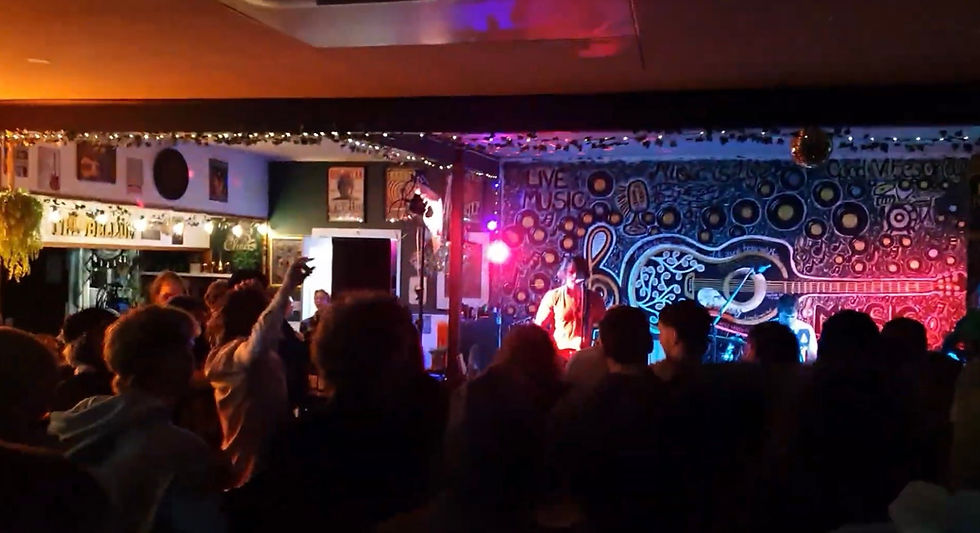
If a venue near you is putting on free shows, that is not nothing. That is someone making a bet that the community will care enough to come through the door, buy a drink if they can, listen properly and help create a reason for the next show to happen.
The venue supports the bands. The bands bring life to the venue. The audience keeps the whole thing from collapsing.
We support you and you support us is not a slogan. It is the basic deal that keeps local culture alive.
The problem is bigger than taste
It is easy to reduce this to personal taste. “I just do not like local music.” “The bands are not good enough.” “I listen to what I like.”
That is fine on the surface, but it does not explain the whole problem.
Australian music is dealing with a stack of pressures at once. Streaming pays tiny amounts compared to the cost of making and promoting music. Touring is expensive because the country is huge and cities are far apart. Regional shows can be hard to make viable. Venues face noise complaints, development pressure and rising costs. Young people have less spare cash. Artists often work other jobs just to keep creating.
Then there is the attention problem. The whole internet is built to keep people consuming whatever is already loudest. If an artist does not have money, industry backing or constant content output, they can vanish from view even when the music is excellent.
So yes, there are systemic issues. Plenty of them.
But the most immediate fix is still simple: listen to Australian artists on purpose.
Do not wait for an algorithm to hand them to you. Do not wait until a UK or US publication says they are cool. Do not wait until they are playing a festival main stage. Look around now. See who is playing locally this week. Ask the venue down the road. Check the support acts. Click the tagged bands on gig posters. Follow the artists your mates are following. Follow your mates that are making music!

Sharing your mate’s music is not cringe
Somewhere along the way, people got shy about sharing their friends’ work. Nobody wants to seem pushy. Nobody wants to spam the group chat. Nobody wants to look like they are trying too hard.
Share it anyway.
If your mate releases a song, post it. If someone you know plays a show, tell people. If the track is rough but promising, say that. If the band is not your style but clearly means something to people, pass it on to someone who might love it.
You do not need to pretend everything is genius. People can smell fake hype. Honest support is better.
Try saying:
“This is not usually my genre, but the chorus is sick.”
“Local band from around here. Give it a go.”
“My mate worked hard on this. Chuck it on if you have a minute.”
“Saw these legends last night and they were heaps of fun.”
That kind of sharing helps more than people think. It puts music in front of actual humans, not just passive listeners scrolling past. It also tells artists they are not shouting into the void.
For emerging musicians, that matters. A lot.
Scenes are built by people who show up
A music scene is not a mysterious thing that appears fully formed. It is just people doing the same small acts often enough that others start to notice.
A band books a show. A venue says yes. A few mates come. Someone films a clip. Another band asks to play next time. A photographer turns up. A zine (maybe The Bellum Zine.....) writes about it. More people hear about it. Someone starts a playlist. Someone else books a mini-fest. Suddenly there is a scene.
None of that happens without attendance.
Showing up is not just buying a ticket. It is attention. It is respect. It is giving artists a room where the songs can actually land.
That does not mean every gig needs to be packed. Small shows can be magic. Some of the best nights happen when there are only 30 people in the room and everyone knows they are seeing something raw and real.
But bands cannot survive forever on empty rooms and polite Instagram likes. Venues cannot keep taking risks if nobody comes. Local music needs bodies in rooms, ears on songs and people willing to talk about what they heard.

Give every genre a chance
Australian music is not one sound. It is punk bands in tiny rooms, indie pop acts recording at home, heavy bands rattling walls, hip hop artists telling local stories, electronic producers shaping late-night sets, folk singers, experimental noise artists, country songwriters, jazz players, metal crews, hardcore scenes and everything in between.
If one local band is not for you, try another.
That is the part people miss when they write off “local music” as one thing. You would never say all overseas music sounds the same. Local music deserves the same basic curiosity.
The best way to find something good is to follow the threads:
Like one support act, then check who they play with
Find a venue you trust, then try a random night
Ask bartenders, sound engineers and regular gig-goers who is worth seeing
Search for local playlists, community radio shows and gig guides
Watch the first band, not just the headliner
Give a new song more than ten seconds before skipping
Some of it will not be your thing. Good. Taste gets sharper when it has something to push against.
You should be able to love a band, hate a band, argue about a band, laugh about a lyric, defend a chorus and complain about the snare sound. That is culture. Silence is worse.
What support looks like when money is tight
Nobody should be guilted into spending money they do not have. Cost of living pressure is real, and live music should not become another place where people feel priced out.
Support can be free or close to free.
If you have no spare cash, stream the song, share the gig poster, add the track to a playlist, bring a friend to a free show, comment something genuine, sign up to a mailing list, take a short clip and tag the artist.
If you have a little money, buy a ticket, grab a drink at the venue, purchase merch, pay for a download or choose the local show over a more expensive night out.
If you have more capacity, become the person who brings others along. That is one of the most useful things anyone can do. A regular gig-goer who introduces five friends to local music can change the feel of a room.
The point is not to do everything. The point is to do something and to do it often enough that it becomes normal.
Australian music needs attention before it needs praise
Support does not mean pretending everything is brilliant.
It means giving artists the chance to be heard before deciding. It means understanding that a country without a healthy local music culture becomes flatter, quieter and less interesting. It means recognising that the next great Australian act probably starts in a room that looks ordinary from the street.
The 8.5 per cent figure is sad, but it is not surprising. Anyone close to local music has felt this coming. The crowds are harder to build. The costs are heavier. The attention is scattered. The work keeps getting harder.
Still, there is a way back.
Share your mates’ music. Explore the bands in your area. Go to the free gig. Stay for the opener. Follow the artist after the show. Send the song to one person who might care. Buy the shirt when you can. Talk about the music while it is still small enough for your support to matter.
Australian music does not need pity. It needs participation.
If we want local artists and venues to keep supporting the community, the community has to support them back. That starts with listening.
P.S. A big thank you goes out to Liam Brown, member of our local band GERNZ, for bringing this to my attention, love ya work GERNZ!!

Comments